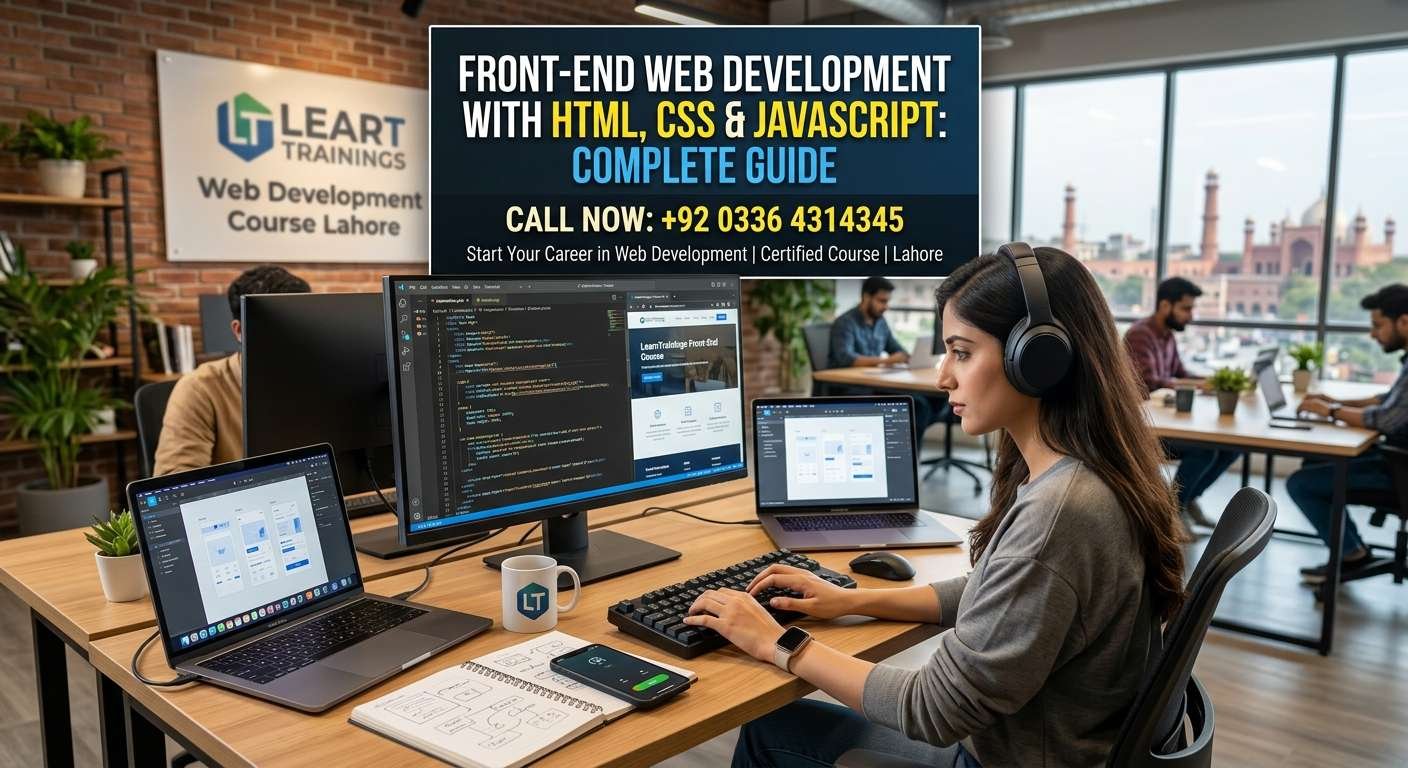
In today’s digital era, every business, organization, and personal brand requires an impactful online presence. At the heart of every modern website lies Front-End Web Development, the craft of building the visual elements, user interface, and user experience that visitors interact with directly. If you want to start a successful career in the tech industry, mastering modern Web Development through core technologies like HTML, CSS, and JavaScript is one of the most rewarding paths you can choose.
What is Front-End Web Development?
Front-end web development refers to the creation of the graphical user interface (GUI) of a website through code. While back-end development handles server-side logic and databases, front-end developers bring web designs to life on the user’s screen.
A great front-end application combines clean code with creative aesthetics, seamless navigation, and rapid responsiveness. Front-end developers work closely with design teams who specialize in UI/UX Designing and Graphic Designing to ensure that functional code mirrors modern user experience standards.
The Three Pillar Technologies
To master front-end development, you must master the fundamental trio of web development technologies: HTML, CSS, and JavaScript.
+-----------------------------------------------------------+
|                   THE FRONT-END TRIO                      |
+-----------------------------------------------------------+
|  HTML        ->  Structure & Content                     |
|  CSS         ->  Styling, Colors, Layouts & Responsiveness|
|  JavaScript  ->  Interactivity, Dynamic Data & Behavior  |
+-----------------------------------------------------------+
1. HTML (HyperText Markup Language)
HTML provides the basic building blocks and backbone of any website. It structures text, headings, images, forms, links, and multimedia elements. Modern HTML5 introduces semantic elements like <header>, <nav>, <article>, and <footer>, which help search engines better read and index site structure.
2. CSS (Cascading Style Sheets)
CSS controls how HTML elements are styled and presented visually across different devices. Using CSS3, web developers apply fonts, colors, background styles, flexbox, and grid layouts. Responsive Web Design techniques ensure that web applications adapt smoothly to mobile phones, tablets, and desktop screens.
3. JavaScript (JS)
JavaScript introduces life and interactivity to static web pages. It enables dynamic user interfaces, interactive forms, animations, data manipulation, and asynchronous API calls (AJAX / Fetch API). Without JavaScript, modern web apps like social networks, interactive dashboards, and online stores could not function.
Expanding Beyond the Basics
Once you are comfortable with raw HTML, CSS, and JavaScript, modern software engineering workflows require learning additional tools and techniques to expand your career opportunities:
- Frameworks & Libraries: Frameworks like React, Vue.js, and Angular help developers construct complex single-page applications (SPAs) quickly.
- Mobile Responsiveness: Developers often expand into building cross-platform apps using Mobile App Development techniques.
- Quality Assurance: Ensuring cross-browser compatibility, web performance, and bug-free releases requires robust Software QA Testing.
- Artificial Intelligence Tools: Modern developers use AI coding assistants to write clean code faster, similar to how kids learn foundational logic through Coding with AI For Kids and creative design with Designing with AI For Kids. Advanced AI applications also extend into fields like Machine Learning AI.
Why Front-End Web Development is a Smart Career Choice
Demand for web development professionals continues to grow exponentially around the globe. Here are the main benefits of entering this industry:
- High Market Demand: Companies of all sizes need customized web applications and intuitive websites.
- Freelancing & Remote Work: Front-end web developers can work remotely for international clients, build digital products, or manage freelance businesses.
- Synergy with Digital Marketing: Web development ties directly into digital growth strategies such as SEO / SMM and targeted campaigns in Digital Media Marketing.
- E-Commerce Growth: Modern brands rely on custom interfaces to drive online shopping through platforms like E-Commerce, Amazon Dropshipping, and ebay Dropshipping.
Essential Skills for Modern Front-End Developers
To succeed in this domain, aim to build a versatile skillset that combines technical and practical skills:
- Version Control (Git & GitHub): Managing project code, collaborating with teams, and tracking changes.
- Multimedia & Content Skills: Incorporating engaging visual assets, including motion graphics and content built through Video Animation or automated Video Creation with AI.
- Productivity & Workplace Operations: Streamlining workflow efficiency through digital tools and solid Office Management.
Step-by-Step Learning Roadmap
If you are beginning your journey today, follow this structured plan:
[ Step 1: Core Fundamentals ]
   ↳ Learn HTML5 semantics and structured markups
   ↳ Master CSS3 styling, Flexbox, CSS Grid, and responsive design

[ Step 2: Dynamic Web Interactivity ]
   ↳ Learn JavaScript (ES6+), DOM manipulation, Event handling, and APIs

[ Step 3: Tools & Best Practices ]
   ↳ Git/GitHub version control
   ↳ UI/UX principles and cross-browser testing

[ Step 4: Portfolio Building ]
   ↳ Create real-world landing pages, dynamic web apps, and modern templates
Conclusion
Front-End Web Development with HTML, CSS, and JavaScript is one of the most practical, flexible, and future-proof skills you can acquire. Whether you want to join an IT firm as a full-time web developer, start freelancing, or launch your own online platform, mastering these three languages gives you the power to transform ideas into fully functioning digital experiences. Start practicing today, build real-world projects, and continuously update your knowledge to thrive in the ever-evolving world of technology!