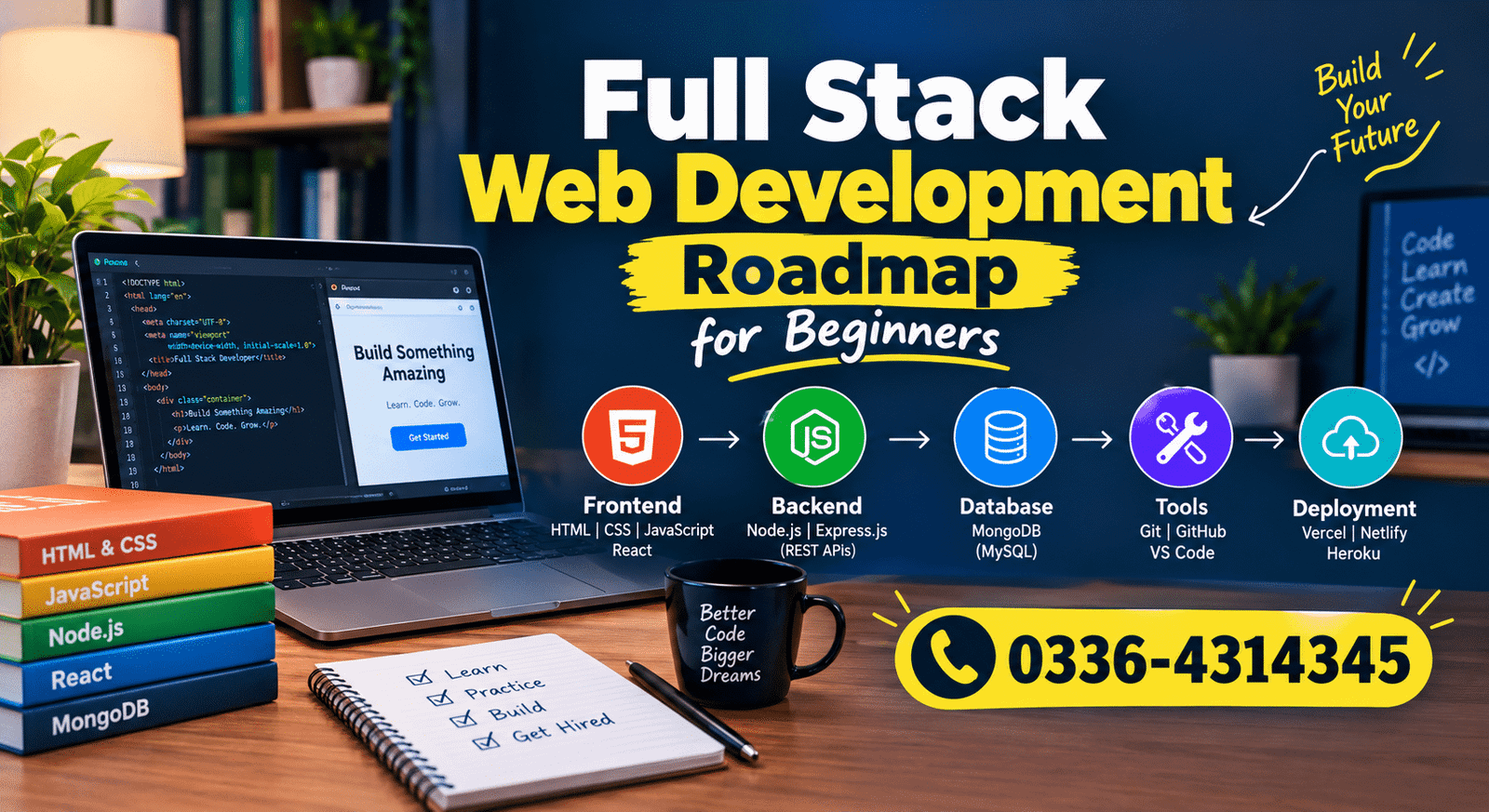
In today’s tech-driven world, web development has become one of the most exciting and rewarding career paths. Whether you want to build interactive user interfaces or manage complex databases, becoming a full stack developer allows you to bring digital ideas to life. However, step-by-step guidance is essential when starting out. This Full Stack Web Development Roadmap is designed specifically for beginners who want to build a clear, structured learning path toward tech mastery.
What is Full Stack Web Development?
A full stack web developer is someone who can build both the front end (what users see on screen) and the back end (the server, database, and logic under the hood) of a website or application.
Instead of focusing solely on visual aesthetics or server-side scripting, full stack developers bridge the gap between design and functionality. This versatility makes them highly sought-after across tech agencies, startups, and enterprise organizations worldwide.
Phase 1: Mastering Front-End Basics
Every great website begins with a solid front-end foundation. The front end covers everything that users directly interact with in their web browsers.
1. HTML5 & CSS3
- HTML5: The backbone of the web. It provides structure to your text, images, forms, and multimedia.
- CSS3: The styling layer. It controls layouts, colors, fonts, responsive sizing, and animations.
2. JavaScript (JS)
JavaScript brings dynamic behavior to modern websites. Beginners should focus heavily on core JavaScript concepts, including DOM manipulation, ES6 syntax, event listeners, and asynchronous operations (Fetch API, Async/Await).
3. UI/UX Principles & Responsive Design
A beautiful site must also be user-friendly. Understanding user interface structure and response design ensures your applications look stunning across mobile devices, tablets, and desktops. If you enjoy crafting visual experiences alongside code, exploring modern UI/UX Designing principles and creative tools like Graphic Designing will greatly improve your layout and wireframing abilities.
Phase 2: Modern Front-End Frameworks
Once you master pure JavaScript, building complex web applications becomes much easier with front-end libraries and frameworks.
- React.js: Currently the most popular JavaScript library for building component-based user interfaces.
- Vue.js / Angular: Great alternatives widely used across enterprise applications.
Learning a front-end framework enables you to build single-page applications (SPAs) with state management, reusable UI components, and fast rendering speeds.
Phase 3: Back-End Development & Databases
The back end handles application logic, user authentication, security, database operations, and API communication.
1. Back-End Runtime & Frameworks
- Node.js & Express.js: JavaScript-based runtime allowing you to use a single language across the entire stack.
- Python (Django/Flask) or PHP: Popular alternatives depending on project requirements.
2. Database Management
To store user accounts, product catalogs, or blog posts, you must understand databases:
- Relational Databases (SQL): PostgreSQL, MySQL (great for structured data and complex relationships).
- Non-Relational Databases (NoSQL): MongoDB (flexible, document-oriented storage popular in modern JavaScript stacks like MERN).
Comprehensive training through a structured Web Development program can accelerate your progress in mastering database connections and server logic.
Phase 4: Modern Tech Extensions & Related Skills
As tech evolves, modern web developers often collaborate with adjacent disciplines or use software tools to enhance their applications:
- Quality Assurance: To ensure your web application is bug-free and reliable under heavy traffic, understanding fundamentals of Software QA Testing is a valuable advantage.
- Artificial Intelligence Integration: AI is reshaping how web apps function. Integrating smart algorithms can involve techniques from Machine Learning AI.
- Mobile Applications: Many developers expand their web skills to build cross-platform mobile apps using Mobile App Development frameworks like React Native or Flutter.
- Content Creation & Marketing: If you plan to launch your own web projects or ecommerce platforms, incorporating compelling visuals—such as engaging Video Animation or automated Video Creation with AI—can dramatically boost user engagement.
Phase 5: Version Control, APIs, and Deployment
To make your website live and accessible to the public, you need to master essential developer tools:
- Git & GitHub: Version control system to manage code history, collaborate with teams, and deploy repositories.
- RESTful APIs & GraphQL: Mechanisms for frontend and backend components to communicate seamlessly.
- Deployment Platforms: Vercel, Netlify, Render, or AWS for publishing live web applications online.
Complementary Skills for Tech Enthusiasts & Entrepreneurs
Web development often intersects with online business operations and digital strategy. Broadening your digital skill set opens up diverse opportunities:
- Digital Growth: Combining coding expertise with online visibility strategy through SEO / SMM or overall Digital Media Marketing ensures your web applications attract organic traffic.
- Ecommerce Systems: Many developers specialize in setting up online stores or dropshipping portals, leveraging platforms like E-Commerce, Amazon Dropshipping, and ebay Dropshipping.
- Business Productivity: Basic organizational skills, such as proficient Office Management, streamline project management and client communication.
- Future Generations: It is never too early to start learning tech. Special courses designed for younger learners—including Coding with AI For Kids and creative Designing with AI For Kids—are paving the way for tomorrow’s software engineers.
Conclusion: Start Building Today!
Becoming a full stack developer requires time, continuous practice, and patience. Follow this roadmap step-by-step: focus on HTML, CSS, and JavaScript first, move on to backend logic and databases, and continuously build real-world portfolio projects. By combining practical coding experience with adjacent digital skills, you will position yourself for a successful and versatile career in technology.