The global online marketplace is evolving rapidly, creating unprecedented opportunities for entrepreneurs to start an online business with low upfront capital. Among the various online business models, the E-Commerce Dropshipping Model has emerged as one of the most accessible and scalable paths to financial independence.
Whether you want to launch a full-scale online business or explore specialized platforms, understanding how dropshipping works—and leveraging modern digital skills—is essential for long-term success. In this complete step-by-step guide, we will break down how the dropshipping model works, how to get started, and how digital expertise can accelerate your growth.
What is the E-Commerce Dropshipping Model?
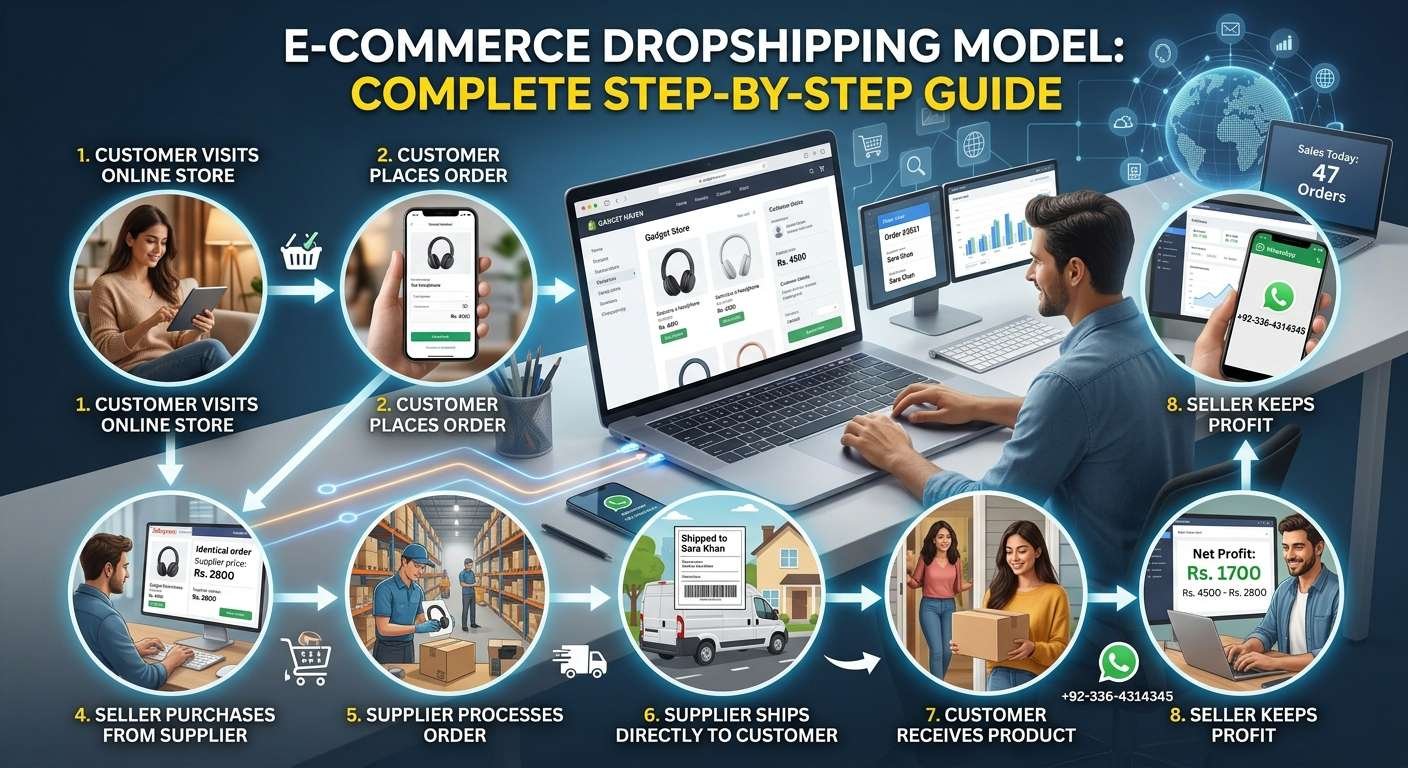
At its core, dropshipping is a retail fulfillment method where a store doesn’t keep the products it sells in stock. Instead, when a store sells a product, it purchases the item from a third party (usually a wholesaler or manufacturer), who then ships it directly to the customer.
This eliminates the need for inventory management, warehousing space, and large initial investment costs. However, while the business model itself is simple, building a profitable enterprise requires mastery across multiple online disciplines—ranging from store design to performance marketing.
Step 1: Choose Your Niche and Select the Right Platform
Success in E-Commerce starts with choosing the right market niche and retail platform. Selecting a market with high demand and low saturation allows you to target a specific audience effectively.
Once you identify your niche, decide where to host your business:
- Brand Storefronts: Building an independent store using platforms like Shopify or WooCommerce gives you full control over custom branding and user experience.
- Global Marketplaces: Alternatively, you can leverage giant selling platforms. Mastering Amazon Dropshipping or expanding through ebay Dropshipping allows you to tap into millions of active buyers right from day one.
Step 2: Build a High-Converting Online Store
Your website or marketplace store acts as your storefront. To turn visitors into paying customers, your store must look trustworthy, professional, and easy to navigate.
- User Experience & Design: Modern shoppers demand seamless digital experiences. Applying proper principles of UI/UX Designing ensures visitors can navigate your site smoothly.
- Visual Aesthetics: Eye-catching branding, clean store logos, and promotional banners rely on solid Graphic Designing to build instant brand trust.
- Custom Development: If you want custom functionalities or a bespoke shopping platform, learning Web Development allows you to build customized features and optimize load speeds.
- Mobile Optimization: Since over 60% of online sales happen on mobile devices, optimizing mobile interfaces or offering a dedicated shopping platform using Mobile App Development can dramatically boost conversion rates.
Step 3: Implement Strategic Marketing & Driving Traffic
Building a store is only half the battle; driving targeted traffic is what brings sales. Modern e-commerce businesses rely on a mix of organic and paid marketing strategies:
- Organic Search & Social Reach: Implementing structured SEO / SMM strategies helps your store rank organically on search engines like Google while engaging potential customers on social media platforms.
- Paid Advertising Campaigns: Comprehensive Digital Media Marketing tactics—such as Facebook Ads, Google Shopping Ads, and TikTok promotions—are key to driving instant, targeted traffic to your product listings.
- Engaging Content & Video: Video advertising outperforms static images on almost every ad platform. Producing custom promotional clips through Video Animation or utilizing modern tools for Video Creation with AI allows you to create high-converting ad creatives quickly and cost-effectively.
Step 4: Automate Operations and Ensure Quality
As your sales scale, manual tasks can quickly become overwhelming. Automating your business processes is vital for long-term sustainability.
- Artificial Intelligence & Automation: Leveraging smart automation tools, data analytics, and advanced Machine Learning AI enables you to predict inventory demand, analyze customer behavior, and dynamic pricing strategies.
- Site Quality & Testing: Before launching large marketing campaigns, conducting thorough Software QA Testing ensures that checkout flows, payment gateways, and backend integrations function without bugs.
- Administrative Management: Maintaining smooth operations, customer support, and supplier coordination requires disciplined organizational skills, making Office Management principles valuable for streamlining daily workflow.
Future-Proofing Your Skillset: Next-Gen Learning
The digital landscape is evolving fast, and early exposure to tech tools gives future generations a massive advantage. Today, young learners can explore creative technologies through specialized programs like Designing with AI For Kids and foundational coding logic through Coding with AI For Kids. Fostering digital literacy early prepares future innovators to navigate and lead in the digital economy.
Conclusion
The E-Commerce Dropshipping Model remains one of the most dynamic business opportunities available today. By finding high-demand products, designing a seamless customer experience, and running targeted digital marketing campaigns, you can build a sustainable, scalable, and highly profitable online business.
Mastering these interdisciplinary skills—from web development and marketing to AI automation—is the ultimate formula to stay ahead in the competitive world of global e-commerce.