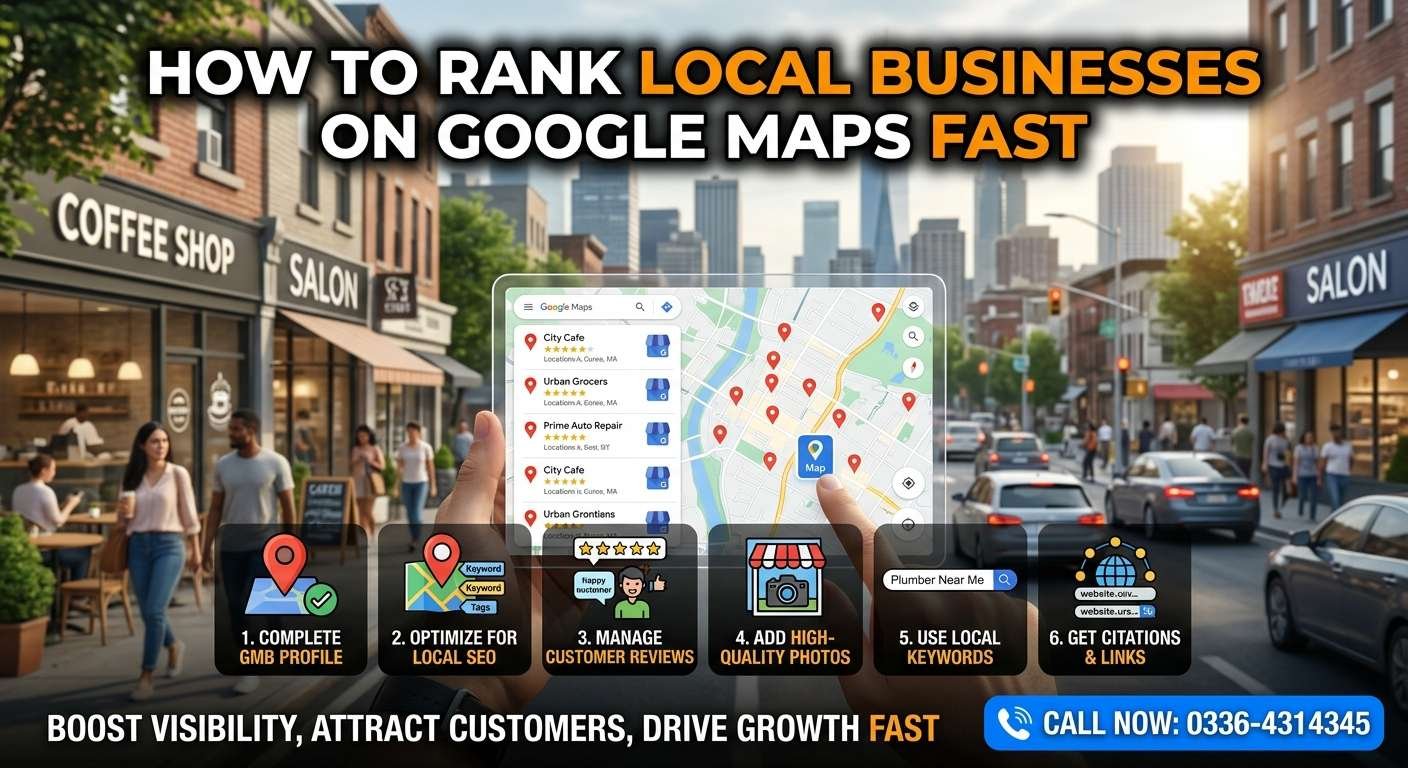
For any local business, appearing at the top of Google Maps (the Google Local 3-Pack) is the ultimate game-changer. When customers nearby search for services, Google Maps results are usually the first thing they see. Ranking high on Google Maps drives direct calls, store visits, and leads faster than traditional organic search rankings.
If you want to boost visibility and attract high-intent local customers, here is a step-by-step guide on how to rank local businesses on Google Maps fast.
1. Claim and Fully Optimize Your Google Business Profile (GBP)
The foundation of local ranking is your Google Business Profile (formerly Google My Business). To rank quickly, your profile must be 100% complete and accurate.
- NAP Consistency: Ensure your Name, Address, and Phone Number match exact details across your website and social platforms.
- Choose the Right Primary Category: Your primary business category heavily influences local map rankings.
- Write a Detailed Description: Include relevant localized terms and core service offerings.
- Add High-Quality Visuals: Profiles with regular photo updates get significantly more driving directions and clicks. Incorporating skills from a professional course in Graphic Designing can help businesses create eye-catching cover images, promotional banners, and visual branding assets.
2. Build a High-Converting Local Website
Your Google Business Profile and website work hand-in-hand. Google checks your website to verify service details, business authority, and user engagement.
- Mobile-First Experience: Over 70% of local map searches originate from smartphones. A slow or poorly designed mobile website will hurt your rankings. Learning modern techniques through UI/UX Designing ensures your visitors enjoy a seamless mobile navigation experience.
- Fast Loading & Technical Architecture: Ensure your website loads quickly and is built on clean code. Investing in solid Web Development allows you to implement schema markup (LocalBusiness structured data), which explicitly tells Google your business location and operating hours.
3. Leverage SEO and Digital Marketing Strategies
To rank fast on Google Maps, you must signal to Google that your brand is prominent and trusted in your geographical area.
- Local On-Page SEO: Embed Google Maps on your contact page, use localized H1/H2 headings, and create location-specific service pages.
- Comprehensive Search Marketing: Combining organic search optimization with targeted social signals speeds up local exposure. Mastering SEO / SMM equips business owners and marketers with the skills to audit local keywords, build local backlinks, and manage social engagement.
- Omnichannel Advertising: To capture instant leads while waiting for organic map rankings to peak, executing strategic campaigns with Digital Media Marketing helps drive immediate paid traffic and localized brand awareness.
4. Automate Content and Creative Workflows with AI
Modern local marketing moves at a rapid pace. Businesses that produce content faster and engage customers continuously tend to outperform competitors on Google Maps.
- Visual Brand Identity: Using AI-assisted design tools streamlines post creation for Google Business updates. Educating young creators early through programs like Designing with AI For Kids fosters logical and creative problem-solving skills for the digital future.
- Interactive Web Tools: Custom calculators or interactive tools built with Coding with AI For Kids showcase how accessible technology education has become for building light, engaging web widgets.
- Engaging Video Updates: Google Business Profile allows short video posts. Creating quick promotional videos using Video Creation with AI keeps your profile fresh and increases customer conversion rates.
5. Expand Local E-Commerce & Service Operations
For service-based or retail businesses, ranking on Google Maps often links directly to online store management and automated business workflows.
- Product Catalog Integration: Connect your Google Business Profile with an online catalog. Understanding E-Commerce principles allows local stores to sell products directly online alongside local map pickup options.
- Efficient Office & Customer Management: Handling customer inquiries, reviews, and bookings requires organized systems. Efficient Office Management ensures prompt client communication, which directly leads to positive Google reviews.
- E-Commerce Expansion: Businesses expanding into retail automation often explore online selling models such as Amazon Dropshipping and ebay Dropshipping to complement their physical footprint with multi-channel revenue streams.
6. Utilize Advanced Tech Solutions & Quality Assurance
As local businesses scale, maintaining stable digital tools, mobile apps, and smart software systems becomes critical for local search dominance.
- Smart Data Analytics: Advanced data modeling driven by Machine Learning AI helps analyze consumer search patterns and predict local demand trends.
- Custom Mobile Solutions: Having a dedicated app developed through Mobile App Development improves customer retention and enables direct push notifications for local promotions.
- Engaging Visual Media: Explainer videos and motion graphics created via Video Animation enhance landing page dwell time, indirectly sending positive user interaction signals to Google.
- Flawless User Experience: Before launching local digital tools or booking portals, rigorous Software QA Testing ensures error-free performance across all mobile devices and browsers.
7. Collect and Respond to Reviews Consistently
Reviews are one of the most significant ranking factors for Google Maps.
- Ask Satisfied Customers: Send SMS or email review requests immediately after a successful service or purchase.
- Respond to Every Review: Reply to both positive and negative reviews politely, incorporating relevant service keywords naturally.
- Keep Information Updated: Post weekly updates, special offers, and photos on your Google Business Profile to demonstrate active management.
Conclusion
Ranking local businesses on Google Maps fast requires a combination of Google Business Profile optimization, consistent review management, robust local SEO, and a fast, modern website. By building strong digital technical skills across web development, design, and search marketing, businesses can build a sustainable online presence that dominates local search results.